
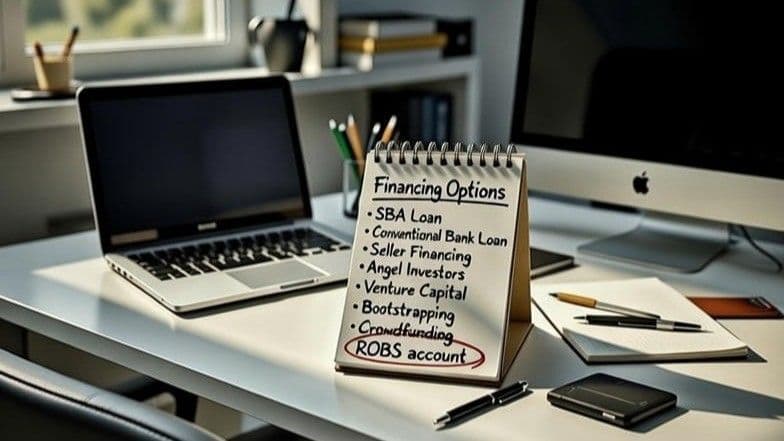
For many first-time buyers and acquisition entrepreneurs, one of the biggest barriers to purchasing a small business is assembling the capital stack. Traditional SBA loans usually require 10% equity, and not every buyer has that cash sitting aside. That's where ROBS financing, short for Rollovers as Business Startups, enters the conversation.
ROBS funding allows a buyer to use retirement savings to finance a business acquisition without paying early withdrawal penalties or income taxes. While it can be an effective tool in the right circumstances, it's also one of the most misunderstood forms of acquisition financing. Below is a practical breakdown of how ROBS works, when it can be helpful, and what risks buyers should consider before moving forward.
What Is ROBS Financing?
A ROBS arrangement allows you to take funds from a qualified retirement account (typically a 401(k) or traditional IRA) and invest them directly into a new or existing business. Unlike borrowing from your 401(k), a ROBS is not a loan. Instead, you're rolling your retirement funds into a new corporate structure that then purchases the business.
Here's the high-level flow:
- You create a new C corporation.
- The corporation sets up a qualified retirement plan (usually a 401(k)).
- Your existing retirement funds roll into the new corporate retirement plan.
- The retirement plan purchases company stock, injecting capital into the business.
- Those funds can then be used for the acquisition, working capital, or other approved purposes.
Because this is technically an investment, not a distribution, there are no taxes and no early withdrawal penalties.
Why Buyers Consider ROBS for Acquisitions
1. It can satisfy the SBA equity requirement.
Many SBA lenders accept ROBS as part (or all) of the buyer's 10% equity injection. For buyers with most of their wealth tied up in retirement accounts, ROBS may be the only way to put meaningful equity into a deal.
2. It allows buyers to avoid taking on personal debt.
Because ROBS isn't a loan, you're not adding another debt service line to your financial obligations. This can improve DSCR (debt service coverage ratio) when lenders evaluate your borrowing capacity.
3. It can speed up the deal.
Compared to raising an investor group or negotiating seller financing, ROBS can be structured relatively quickly, especially when handled by a specialized provider.
4. It preserves liquidity.
A ROBS transaction allows you to keep your cash available for working capital, emergencies, or operational needs post-close.
When ROBS Makes the Most Sense
ROBS is most commonly used in scenarios like:
- Buyers who have $150,000–$500,000 in retirement assets but limited liquid savings
- SBA deals with a required injection the buyer can't fully fund with cash
- Acquisitions with strong cash flow but moderate purchase prices
- Situations where keeping bank debt lower improves lender comfort
- Buyers who want to avoid raising outside equity from partners
Common Risks and Downsides Buyers Should Consider
1. You must structure the deal as a C corporation.
This is one of the major structural restrictions. Most small businesses operate as LLCs or S corporations for tax advantages. C corps face:
- Potential double taxation
- More complex filings
- Less flexibility on distributions
Some buyers accept this trade-off temporarily and convert later, but that requires planning and careful execution.
2. Strict IRS compliance rules apply.
ROBS arrangements are not illegal, but they operate in a highly regulated area. The IRS watches them closely. You must:
- Run the company's retirement plan properly
- Offer the plan to employees
- File ongoing compliance documents
- Avoid prohibited transactions
Failure to comply can cause the ROBS structure to collapse, triggering taxes and penalties.
3. You are putting retirement savings at risk.
This is the emotional and financial reality: If the acquisition fails, your retirement funds are exposed just like any other owner's equity.
4. Additional ongoing administrative costs
Most ROBS providers charge:
- Upfront fees (typically $4,000–$7,000)
- Monthly compliance fees (usually $125–$150)
This isn't a deal-breaker, but it should be built into your financial model.
5. Your employees become eligible for the retirement plan.
Because the plan must be offered to eligible employees, you may face:
- Employer contributions
- Administrative complexity
- Additional compliance requirements
This surprises many buyers.
How ROBS Fits into an SBA Deal Structure
Most SBA lenders treat a ROBS contribution as qualified equity, but they often require:
- Documentation from the ROBS provider
- Proof that the rollover was completed correctly
- Evidence that no debt is tied to the injection
Some lenders prefer part-cash, part-ROBS injections for perceived stability.
ROBS Right for Every Buyer?
No. ROBS is best for buyers who:
- Are comfortable using retirement funds as equity
- Want to minimize new debt
- Are prepared for C corporation tax implications
- Will use a reputable third-party administrator
- Understand the compliance responsibilities
Buyers who are risk-averse, prefer pass-through tax structures, or want simple ownership structures may be better served with:
- Cash injections
- Partner capital
- Seller financing
- HELOCs or personal loans
- SBA-approved equity sources
Practical Advice Before Moving Forward
If you're considering ROBS financing for an acquisition, here are key steps to take:
- Run a 5-year model to understand C corporation taxation.
- Consult with a CPA who understands both M&A and ERISA obligations.
- Validate SBA lender acceptance early in the process.
- Ensure your target business can support the post-close cash needs.
- Work with a reputable ROBS provider, not a discount shop.
- Understand how your retirement plan will integrate with employees.
This is not a DIY structure. It's a compliance-heavy, ongoing commitment.
Final Thoughts
ROBS financing can absolutely unlock opportunities for buyers who don't have the cash liquidity to meet SBA equity requirements. When used correctly, it's a powerful tool that allows an acquisition entrepreneur to put meaningful capital into a deal without incurring additional debt.
But it comes with responsibilities, tax implications, and long-term consequences that buyers must fully understand.
ROBS is not inherently good or bad, it's simply one financing tool among many. The key is understanding when it fits, when it doesn't, and how to structure it in a way that protects your investment and supports long-term success.